 The Vertex Journal
Tooling
Reverse ETL, or the pipeline that apologizes for the last one
Syncing warehouse tables back into SaaS tools is sometimes necessary and often a symptom. How to tell which one you have.
By The editors · · 2 min
Reverse ETL is the practice of computing something in the warehouse (a churn score, a customer segment, a lifetime value) and syncing it back into the operational tools where people work: the CRM, the ad platform, the support desk. The category earned a real market, and a skeptical reader should still ask the obvious question about any architecture where data leaves a system, tours the warehouse, and returns to the system next door.
the legitimate case
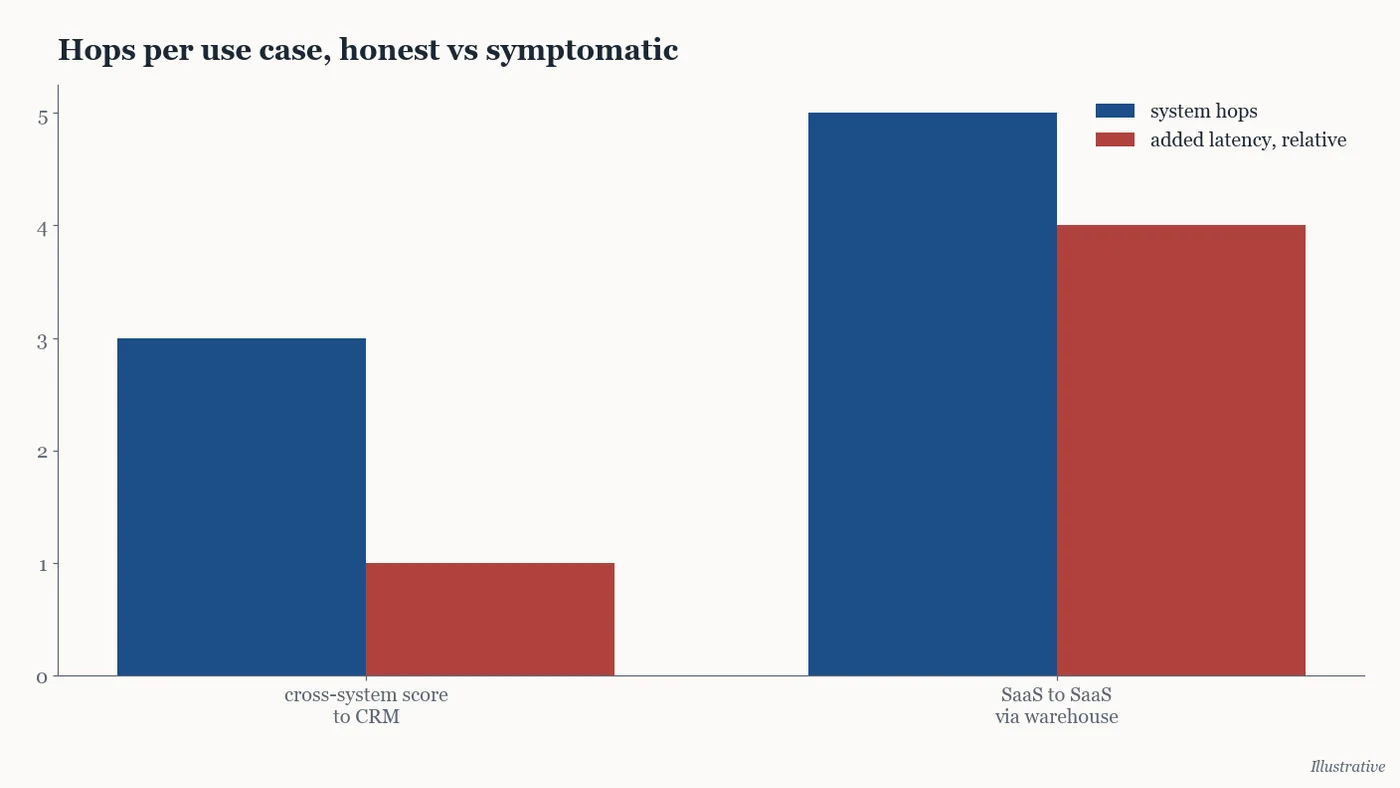
The warehouse is where cross-system truth lives. A churn score needs product events, billing history and support tickets; no single operational tool has all three. Once computed, the score is only useful where a human acts, and no salesperson is opening a BI tool mid-call. Moving the number to the point of action is real work with real value. This case is honest and common.
the symptomatic case
The other pattern: reverse ETL deployed to patch integrations that should not route through analytics at all. Syncing data from one SaaS tool to another with the warehouse as an accidental middleman adds a batch delay and two failure modes to what an event-driven integration would do directly. The tell is latency sensitivity: when the receiving system needs the update in seconds, the analytical stack was the wrong courier, and the fix belongs at the integration layer, not in a sync schedule.
the operational fine print
Two clauses deserve reading before any contract. First, the write path: reverse ETL writes into systems of record, and a bad sync does not break a dashboard, it emails ten thousand customers or reassigns a sales territory. The guardrails that matter are dry-run diffs, rate limits and a rollback story, and vendors differ more on these than on any feature the comparison grids track. Second, the pricing meter: per-row-synced billing turns an eager sync schedule into a bill that scales with enthusiasm rather than value, and the first invoice after marketing discovers audience syncs is a rite of passage. Sync the scores when they change, not on a timer, and the meter behaves. The freshness arithmetic from the batch defense applies on the way out of the warehouse too: fresher costs more, and the consumer is still a person with a call list, not a machine.
verdict
Adopt for activating genuinely cross-system computations; decline the version where it launders integration debt through the data team's budget. A useful smell test: if the column you are syncing back was never aggregated, joined or scored along the way, it did not need the warehouse vacation.